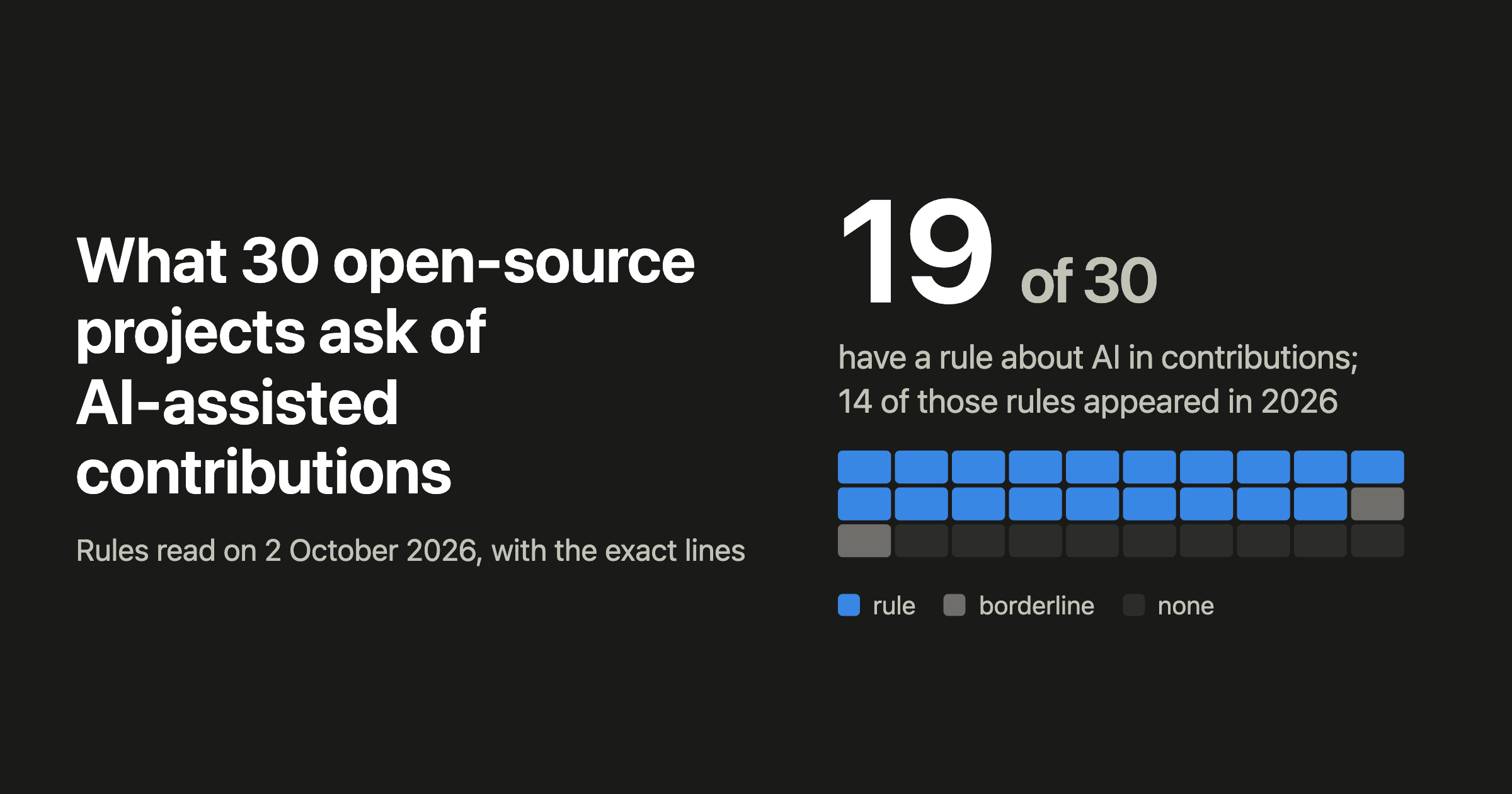
What 30 open-source projects ask of AI-assisted contributions
On 2 October 2026 I read the contribution rules of 30 open-source repositories. 19 have a rule about AI, and 14 of those rules appeared in 2026. Fifteen ask you to say that you used AI, ten want a person to write the text, and the commit trailer that coding agents add by default is required by some and banned by others. Then what happened to the agent-assisted work I sent to twelve projects that week.
Read the note →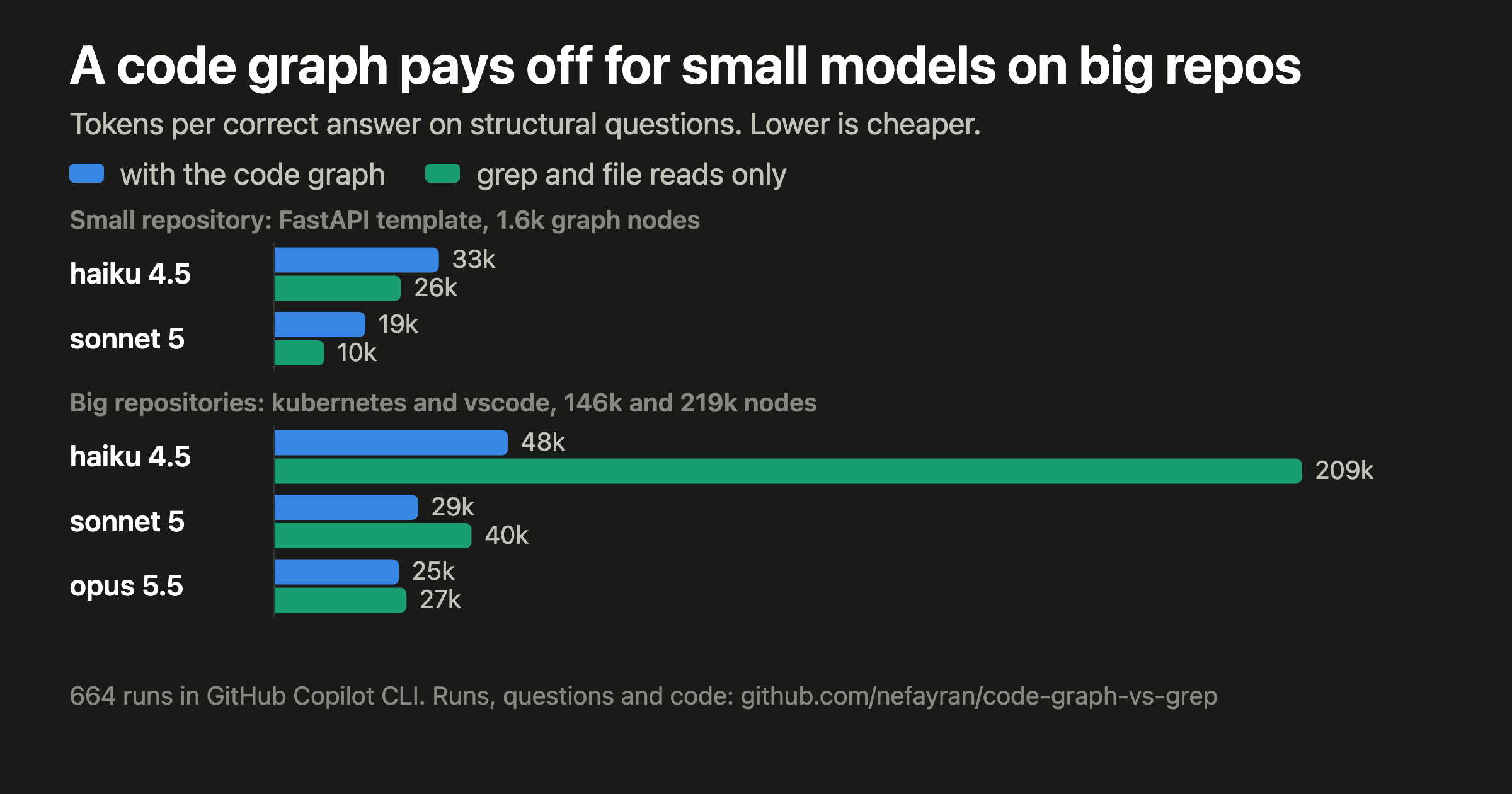
Where a code graph pays off: big repositories, small models
664 headless runs in GitHub Copilot CLI on four public repositories from 1.6k to 219k graph nodes, with haiku 4.5, sonnet 5 and opus 5.5. On kubernetes and vscode a code graph cut haiku's cost on structural questions to 0.29 of grep's. Sonnet saved about a quarter, opus nothing, and on a small repository the graph cost sonnet 40 to 50% more.
Read the note →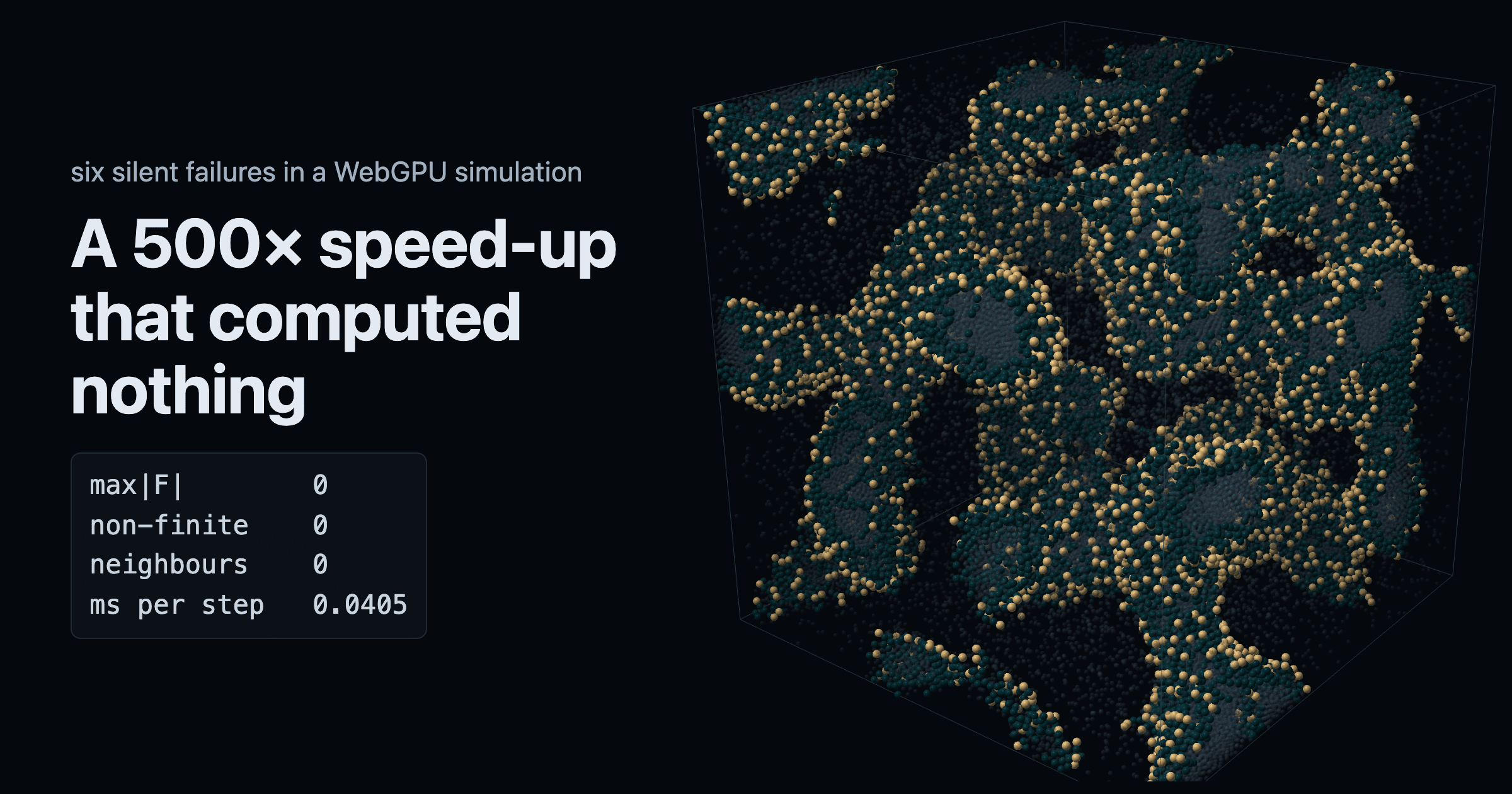
A 500× speed-up that computed nothing: six silent failures in a WebGPU simulation
Six bugs in a WebGPU particle simulation raised no error and returned believable numbers. What each one looked like and what changed.
Read the note →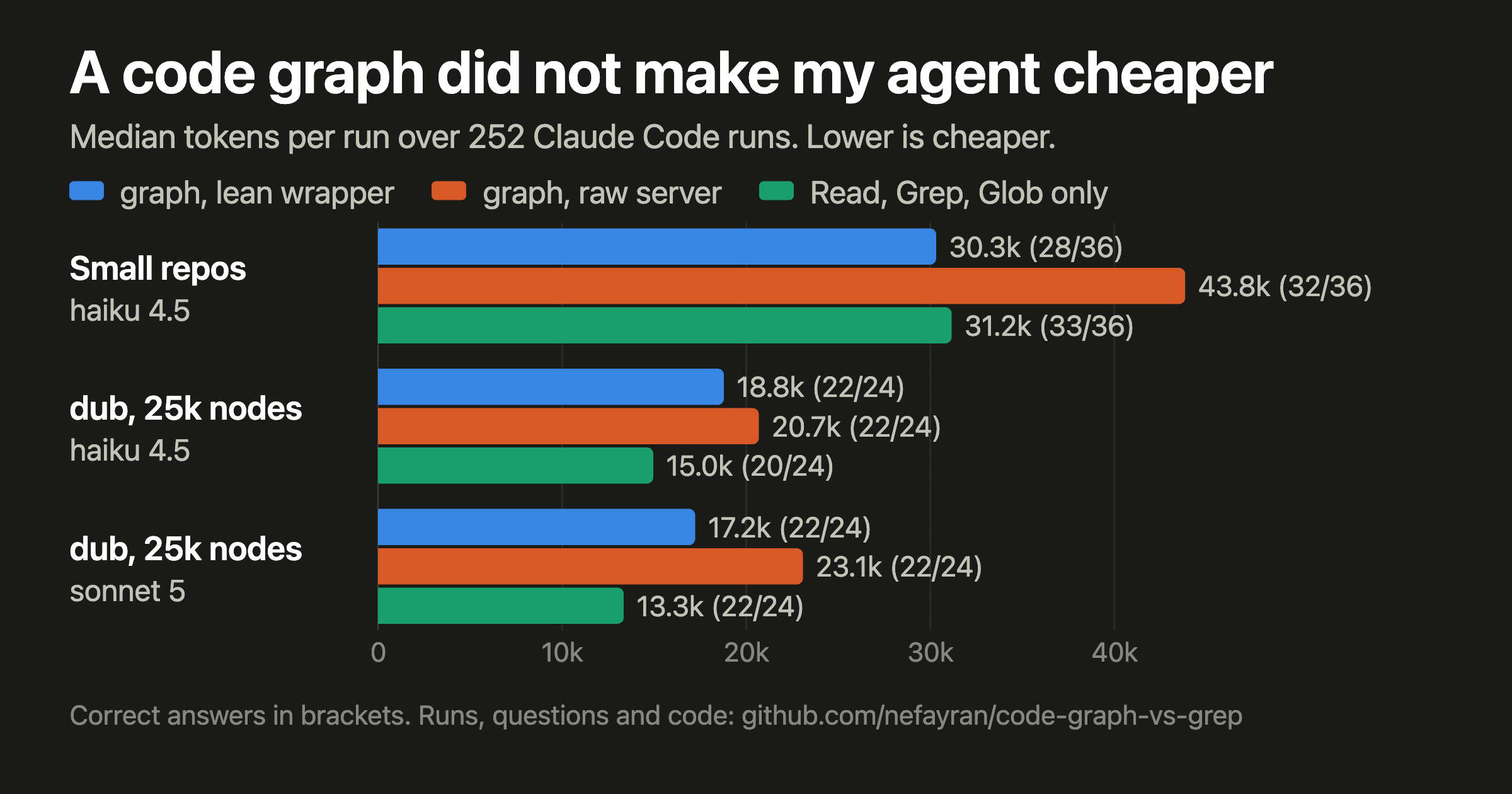
A code graph did not make my coding agent cheaper
252 headless Claude Code runs on public repositories, from 1.6k to 25k graph nodes, with haiku 4.5 and sonnet 5. The graph never beat Read and Grep on tokens, a lean wrapper always beat the raw graph server, and with default settings the agent barely called the graph.
Read the note →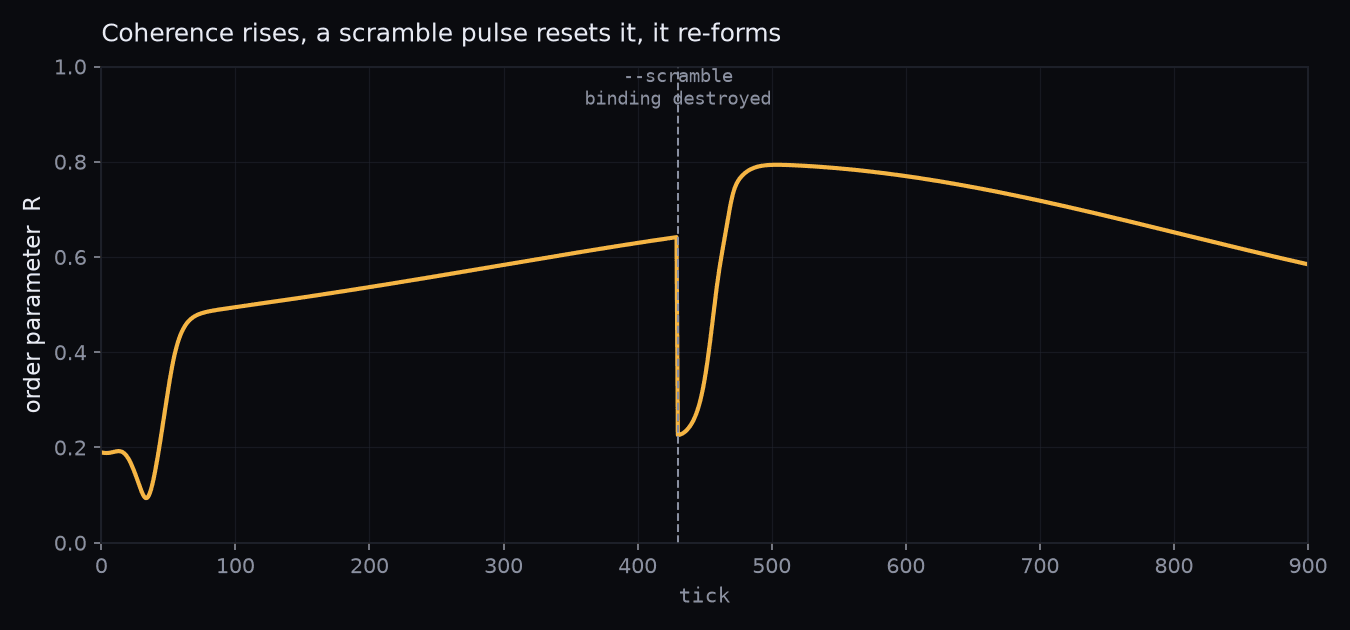
Oscillators, Embeddings, and the Control That Caught Us Lying
Experiment 002 replaced the language nodes with concept-neurons that fire in phase, coupled by embedding similarity. A control that scrambled the phases still got a coherent reading, so the meaning came from the model reading the field, not from the network.
Read the note →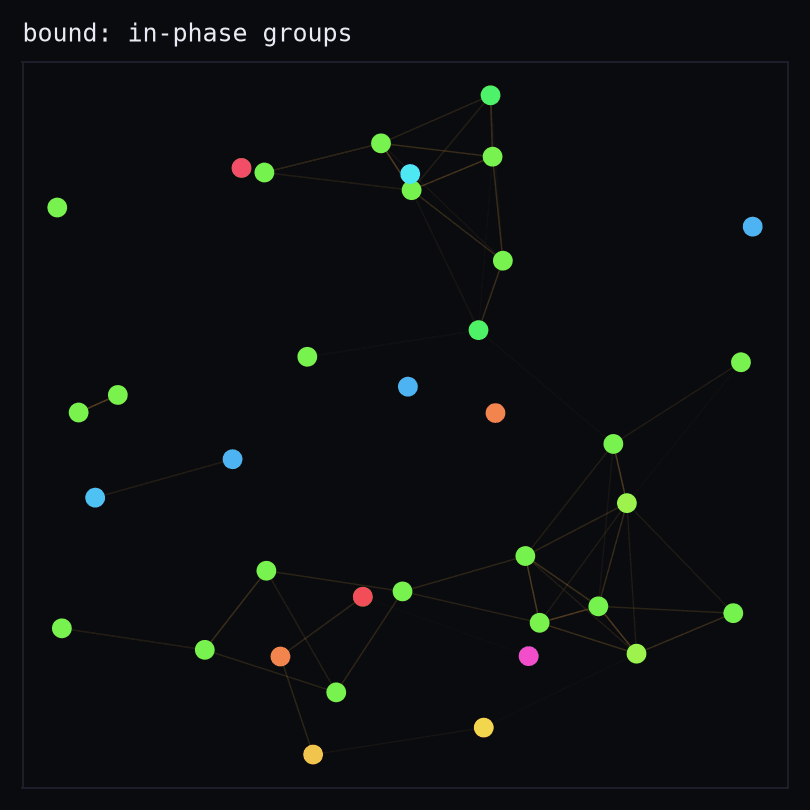
We Wired Language Models Into a Mind. It Collapsed Into One Sentence.
Eight copies of one language model on a ring, with no roles, were told to continue each other's thought. They converged on a single sentence and kept repeating it: mode collapse. A negative result.
Read the note →