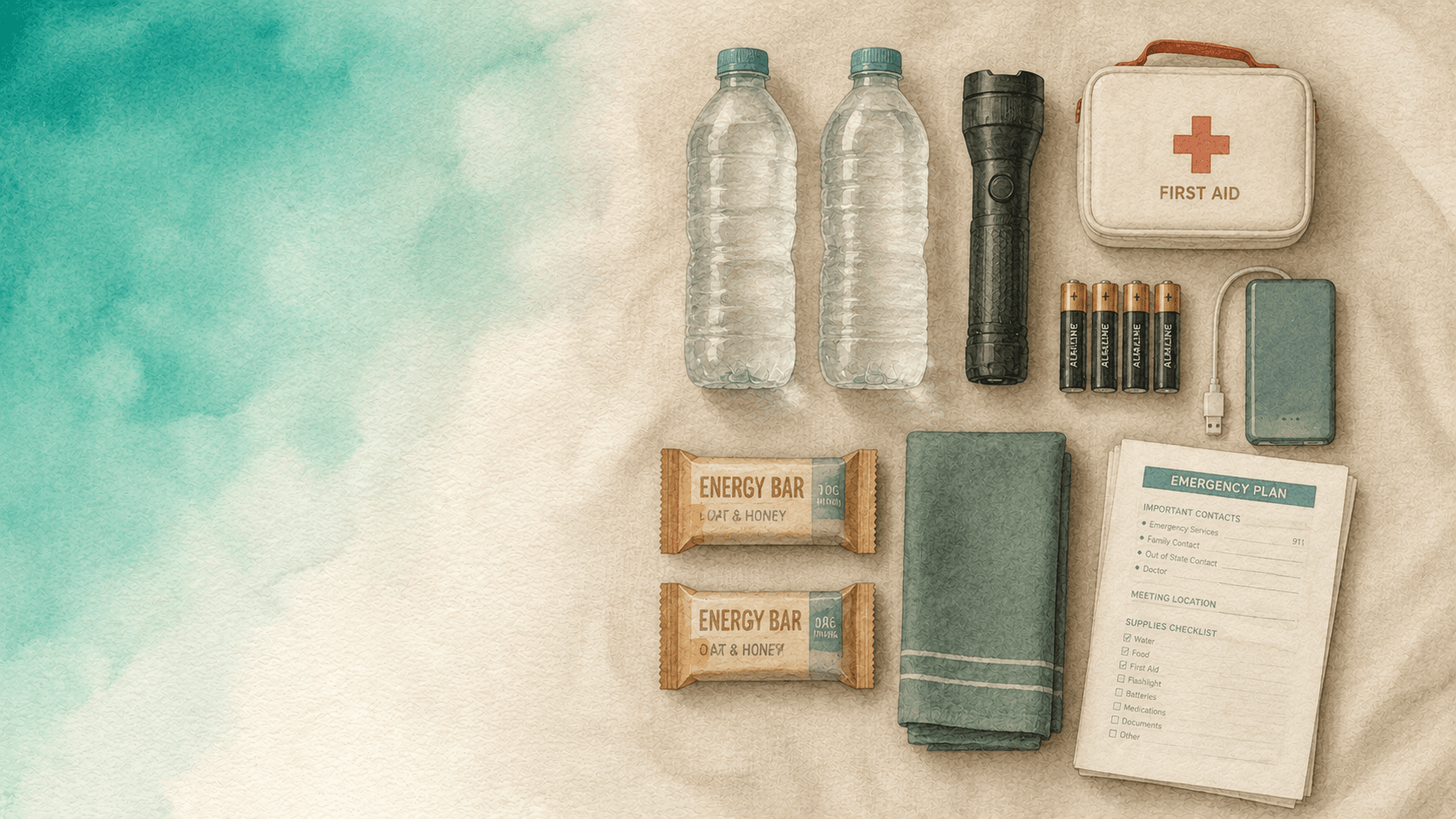
A few years ago a relative of mine was in hospital, suddenly, for a few weeks. Nothing in the end turned out to be permanent — but for those weeks, the rest of the family went looking. Where was the insurance policy. Which bank held the mortgage. Was there a spare key to the flat, and where. What medication, what dose. All of it lived in one person's head, and that person was in no state to be asked.
It worked out. But I watched capable adults spend days reconstructing things that one ordinary list would have answered in five minutes, and I thought: this is an inventory problem. I keep one for my camera gear. I didn't keep one for the things that would actually matter if I weren't here to point at them.
This isn't a morbid post. It's the practical one I wish someone had made me write sooner.
"It's all in my head" is the failure
The reassuring version is that you know where everything is. You do. That's exactly the problem.
A system that lives only in your memory works perfectly right up to the one moment it's needed — when you're unreachable, abroad, unconscious, or simply not picking up for a week. The people who'd have to step in don't need you to be organised on a normal Tuesday. They need the information to exist somewhere they can reach without you. Anything that's only in your head fails the exact test it exists for.
The find-it-fast list
This isn't your whole inventory of possessions. It's a short, specific list of the things someone would have to find in a hurry:
- Documents — insurance policies and their numbers, the mortgage or lease, IDs, the will if there is one, medical records that matter.
- Accounts — which banks, which providers. Not passwords in plain sight, but enough that someone knows what exists and where.
- Keys and access — the spare key, the safe, the storage unit, the building entry code.
- Medications — what's taken, the dose, the prescribing doctor.
- Contacts — the lawyer, the accountant, the landlord, the two people who should be called first.
Each one logged with a photo and, crucially, where it physically lives — because the answer a panicked person needs isn't "you have home insurance," it's "the policy is in the grey folder, second drawer of the desk."
Where it lives is the whole answer
A list of what you own is half an answer. The half that matters under pressure is where each thing is.
This is the same reason plain-language search beats a filing system: nobody hunting for the passport at 5 a.m. wants a category tree, they want "bedroom, cabinet, second shelf." Log the location, not just the item, and a frightened relative typing "insurance" gets a room, a drawer, a folder — not a fresh search through a house that isn't theirs.
Share it with one person, ahead of time
A list nobody can open is no better than a memory nobody can reach.
So this list gets shared — read-only — with exactly one person I'd trust to step in: a partner, a sibling, a close friend. They don't need it today and probably won't think about it. But the access is already granted, so on the day it's needed there's no locked account, no "do you know his password," no second emergency on top of the first. And because it's shared deliberately and can be revoked, I control it the same way I'd control a shared box — one trusted person, by invitation, reversible.
The honest limits
- It's not a legal document. A shared list is not a will, a power of attorney, or estate planning. It points people at the real documents fast; it doesn't replace them. For the legal layer, see a professional.
- Be careful what you put in plain text. Log what exists and where it lives — not full passwords, PINs, or card numbers sitting in the open. Point to where the credentials are kept; use a proper password manager for the secrets themselves.
- It ages with your life. You'll change banks, move, switch doctors. A list last touched three years ago can send someone to the wrong drawer. One review a year keeps it honest.
Build the short version this weekend
Don't try to document your entire life. Start with the five things from the find-it-fast list above: documents, accounts, keys, medications, contacts.
Log each one with where it actually lives, share the list read-only with one person you trust, and tell them it exists. Half an hour, once a year. It's the most useful inventory you'll ever hope nobody needs.
Install Inventory by AllKeep on Google Play, build an "If You Need It" list, and share it with one person. Free on web and Android.