I packed an emergency bag in 2023 and felt responsible about it. Water, energy bars, a flashlight, a power bank, a first-aid kit, a copy of our documents. I put it by the door and forgot about it, which is what you're supposed to do — until I opened it last month out of curiosity.
The water was past date. Two of the energy bars had turned to something I won't describe. The flashlight batteries had leaked and crusted the inside of the torch. The power bank was at zero and wouldn't hold a charge. The one thing an emergency kit has to be — ready — it was not.
The bag wasn't the problem. The problem was that nothing told me it was quietly expiring.
A kit is a thing with dates in it
We treat the emergency bag as a one-time act of responsibility. Pack it, done. But a kit isn't an object; it's a collection of things that expire on different schedules.
Water has a date. Food has a date. Medicine has a date, and it's usually the soonest. Batteries self-discharge and leak. Power banks drain. Even the documents go stale — the insurance policy lapses, the passport expires, the emergency contact moves. The kit you packed once is only ready on the day you packed it, and a little less ready every day after.
What goes in the bag
Whatever the threat where you live — storm, flood, wildfire, quake, a long power cut — the kit is roughly the same. Region changes the odds, not the contents.
- Water and food — enough for a few days, the longest-dated you can buy.
- Light and power — a torch, spare batteries stored outside the device, a charged power bank.
- First aid and medication — the kit, plus any prescription you actually depend on.
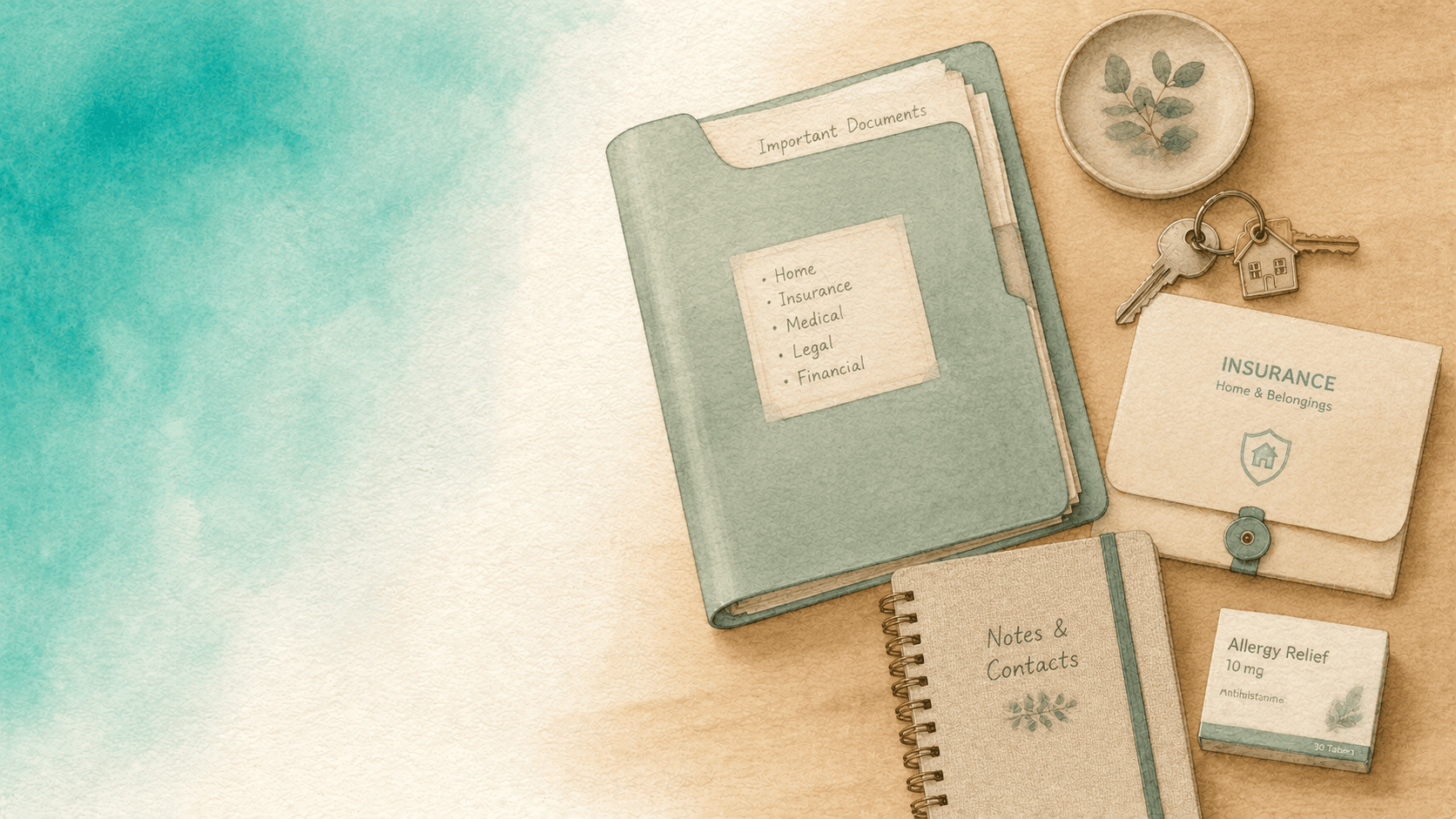
- Documents — photos of IDs, passports, insurance policies, and a list of emergency contacts.
- Cash — small notes, for when the card readers are down.
Lay it all out, photograph it into one box record in AllKeep, and you've got the list. The list is step one; the dates are the part that matters.
Log the expiry, let it remind you
For each item with a date — water, food, medicine, the batteries — I log when it expires. Then the kit stops being a thing I have to remember to check and becomes a thing that tells me.
A few weeks before the water is due, it surfaces. I swap it, drink the old bottles, log the new date. The bag stays ready without me ever doing the dreaded "pull everything out and check the dates" session, because the check happens item by item, ahead of time, instead of all at once and too late.
Updated 18 October 2026: the dates live in the web app. Open an item and set the day in its "Expiry date" card. Home lists under "Coming up" whatever is due in the next 60 days, and "Add to calendar" downloads a file that puts a reminder in your own calendar two weeks before each date. The reminder reaches you only once that file is in your calendar. The Android app doesn't show the dates yet. How the dates work.
Photograph the documents while you're there
The slowest part of any real emergency is paperwork you can't reach — the insurance policy in a drawer in a house you can't get into.
While the kit is open on the floor, photograph the documents that matter: IDs, passports, the insurance policy with its number, your contacts. Put them on the same record. Now they're in your pocket, synced, reachable from any phone — not only in the bag that might be on the wrong side of a locked door. This is the same instinct as documenting a place on move-in day: photograph the thing while you're standing in front of it, because later is harder.
What this won't do
- It won't pack the bag for you. The app tracks dates; you still buy the water and rotate the stock. The reminder is worthless if you ignore it.
- It's not medical or safety advice. What belongs in your kit depends on where you live and who you live with. Use your local guidance for the contents; use AllKeep to keep them from expiring.
- A phone in a real emergency may be dead. Keep the physical document copies in the bag too. The digital record is the backup you can reach from anywhere, not a reason to skip the paper.
Open the bag tonight
You don't need to build a new kit. Open the one you already have, the one by the door you haven't looked in since you packed it.
Lay it out. Photograph it into one box. Log the expiry date on the water, the food, the medicine, and the batteries. That's the whole job, and it's the difference between a bag that's ready and a bag that only looks ready.
Living in Japan? The Japan Life Hub covers the wider disaster-prep and move-in picture alongside this.
Open the web app, start a "Go-Bag" box, and log the dates there. The Android app shows the same box and its photos, without the dates for now. Free on web and Android.