A bonus in Japan is not taxed like a month's pay. Your employer takes the insurance first, then looks up your pay of the month before in the National Tax Agency's bonus table, and that row sets the rate for the whole bonus. Two people with the same bonus can pay different tax. Winter bonuses come in December, so I built a calculator for them.
What a bonus leaves
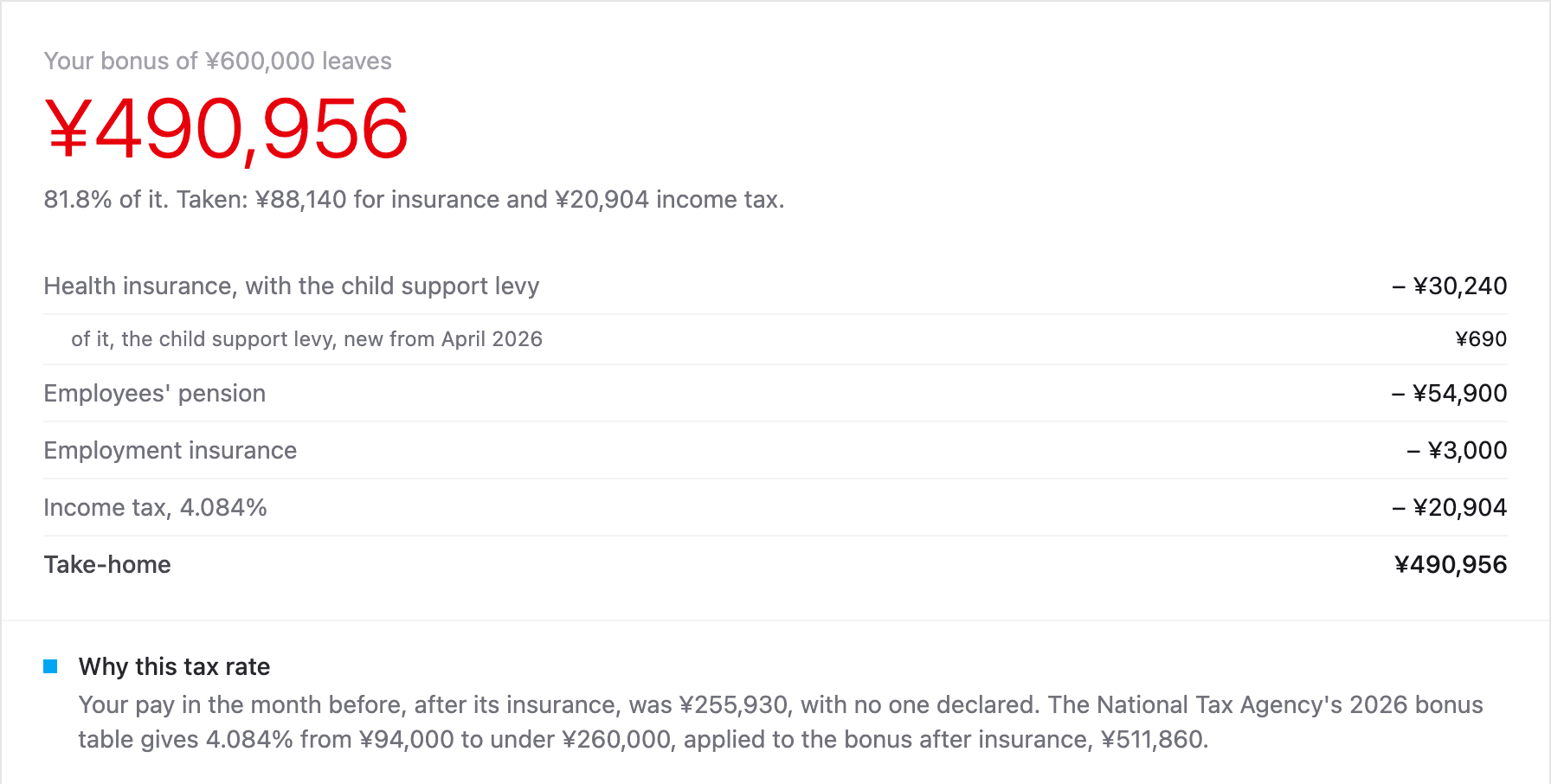
The bonus calculator asks for the bonus, your pay in the month before, your age and your family. A 600,000 yen bonus on 300,000 yen a month, with no family, leaves 490,956 yen: 88,140 yen goes to insurance and 20,904 yen to income tax at 4.084 %. The page shows each premium, the child support levy that health insurance has carried since April, and the row of the table the rate comes from.
When the table is not used
If the bonus after insurance is more than ten times the month before, the table is not used. On 150,000 yen a month, a 2,000,000 yen bonus is taxed through the monthly table: 96,180 yen, where the table's rate would take 71,549 yen. Pension is charged on at most 1.5 million yen of bonuses a month.

What it costs later
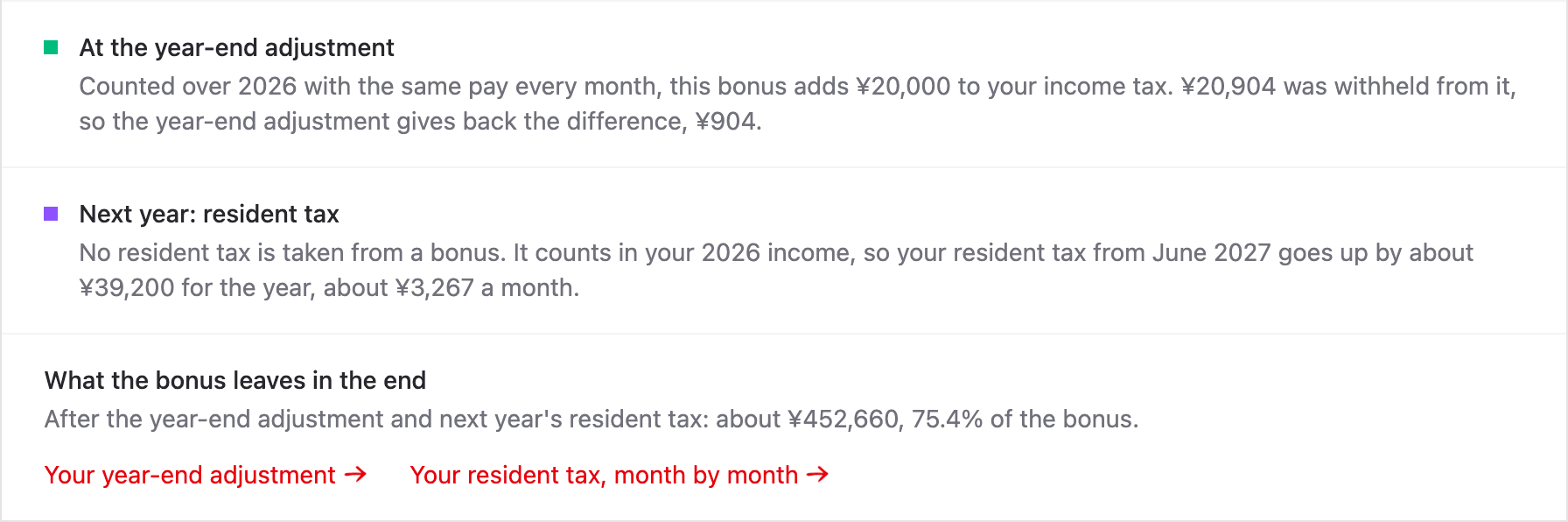
No resident tax is taken from a bonus, but the bonus counts in this year's income. For the 600,000 yen bonus, the year-end adjustment gives back 904 yen, and resident tax from June 2027 goes up by about 39,200 yen for the year. In the end the bonus leaves about 452,660 yen.
The calculator works in the seven languages of the Hub, and the net salary calculator now shows what a bonus of two months' pay would leave.