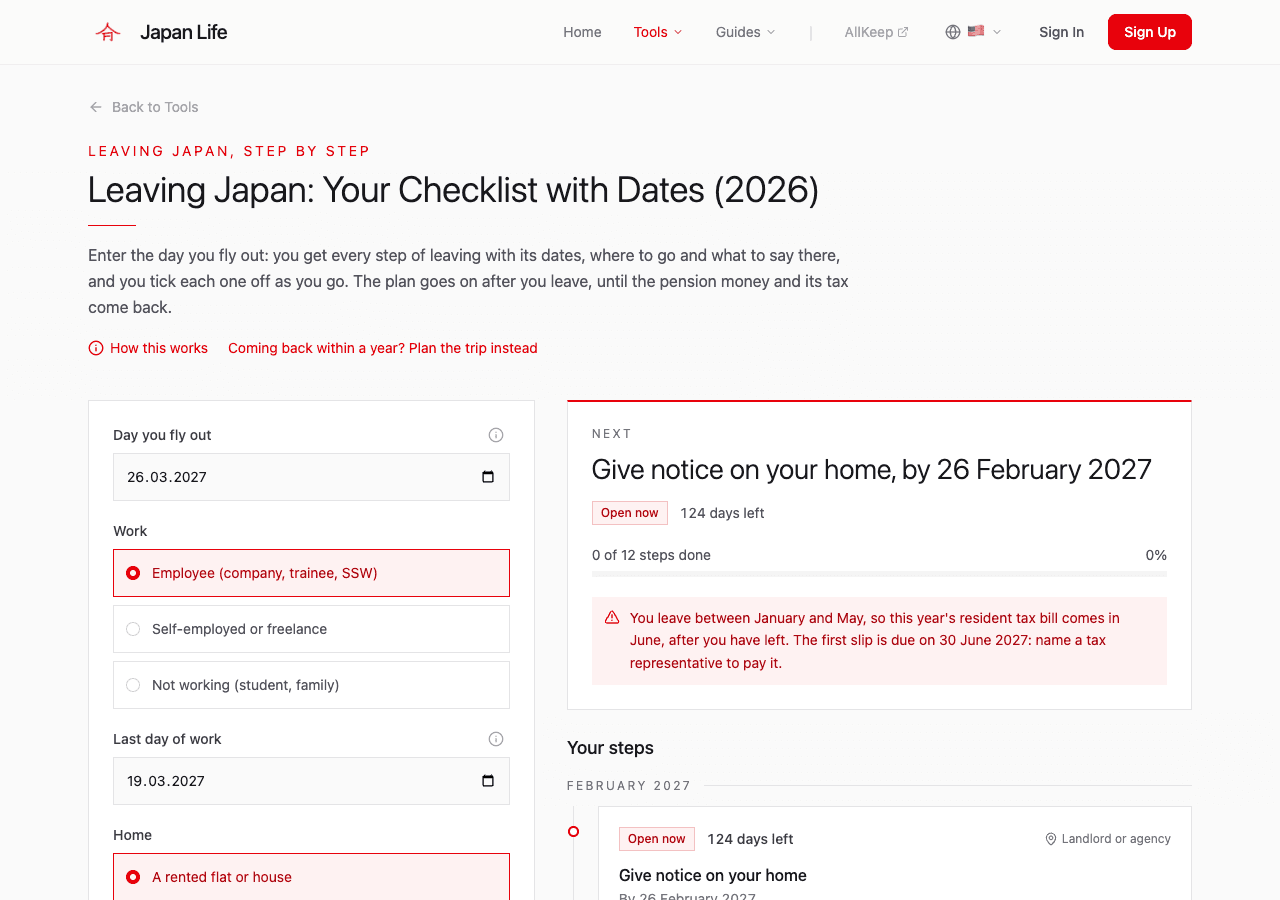
When we launched Japan Life Hub at the end of 2025, the calculators covered 14 cities. Useful for someone moving to Tokyo, Osaka, or Fukuoka — less useful if you were eyeing Toyama, Kanazawa, or Kagoshima.
This week we shipped the biggest data refresh since launch:
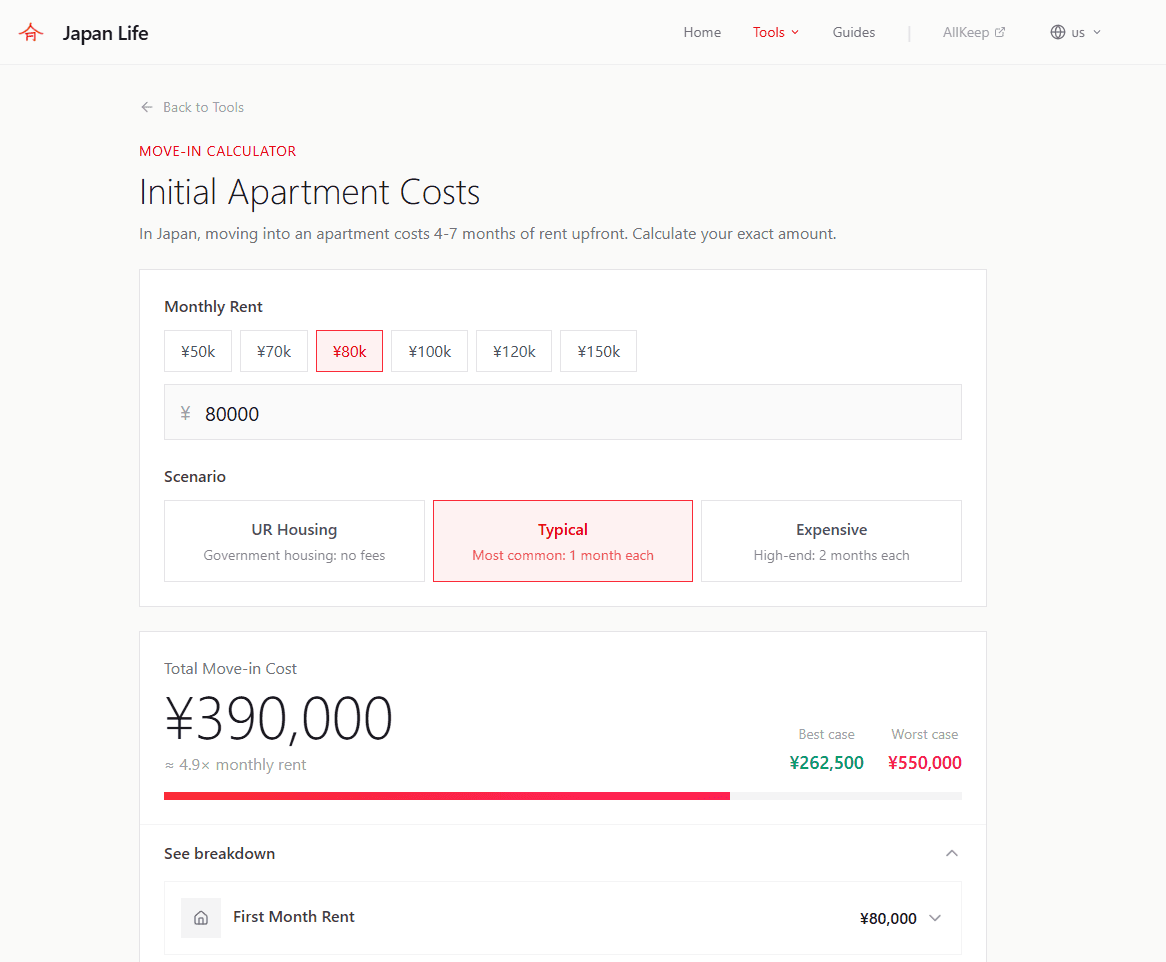
- 14 → 78 cities in every tool (Initial Costs, Net Salary, Monthly Budget, Property Agent)
- 156 → 204 districts with rent ranges and neighborhood notes
- Full 2026 data refresh — tax brackets, rent indices, utility costs, and lifestyle prices all updated
- Unified map mode across Monthly Budget and Property Agent so the same city pin behaves the same everywhere
If you've used the tools before, just open one — the new cities are already there.
Why we did this now
The most common feedback we got from launch users was the same line, phrased six different ways:
"Cool, but my city isn't in here."
Tokyo and Osaka users had a great experience. Everyone else hit the "closest available city" fallback, which is fine for a rough check but useless for actual planning. You don't move to "Tokyo or whichever".
The fix wasn't really a new feature — it was a data pipeline that could keep going. We didn't want to refresh 14 cities by hand twice a year and call it a service.
How the coverage pipeline works
We built a small build-in-public pipeline at
scripts/japan-pipeline/ that pulls from three sources:
- Wikidata — official population, prefecture, designated-city status, lat/long for every Japanese municipality
- OpenStreetMap (Overpass) — district/ward boundaries for the 78 cities we now support, used to seed the rent-range geometry
- Heuristics layer — our own rules for things public data doesn't answer cleanly (e.g. "what counts as a 'cheap' district in Sapporo vs Tokyo" given local price floors)
The pipeline runs in our repo, the output is a small set of JSON files
under apps/web/japan-data/ checked into git. That means:
- Every coverage change is a reviewable commit — no hidden spreadsheet, no "trust me" behind the numbers
- Open-source contributors can correct a wrong rent or add their hometown via PR
- Re-running the pipeline next year is one command, not a quarter of manual work
What's new in the 2026 data
A few highlights, all of which are reflected in the live tools:
Tax tables and net-salary
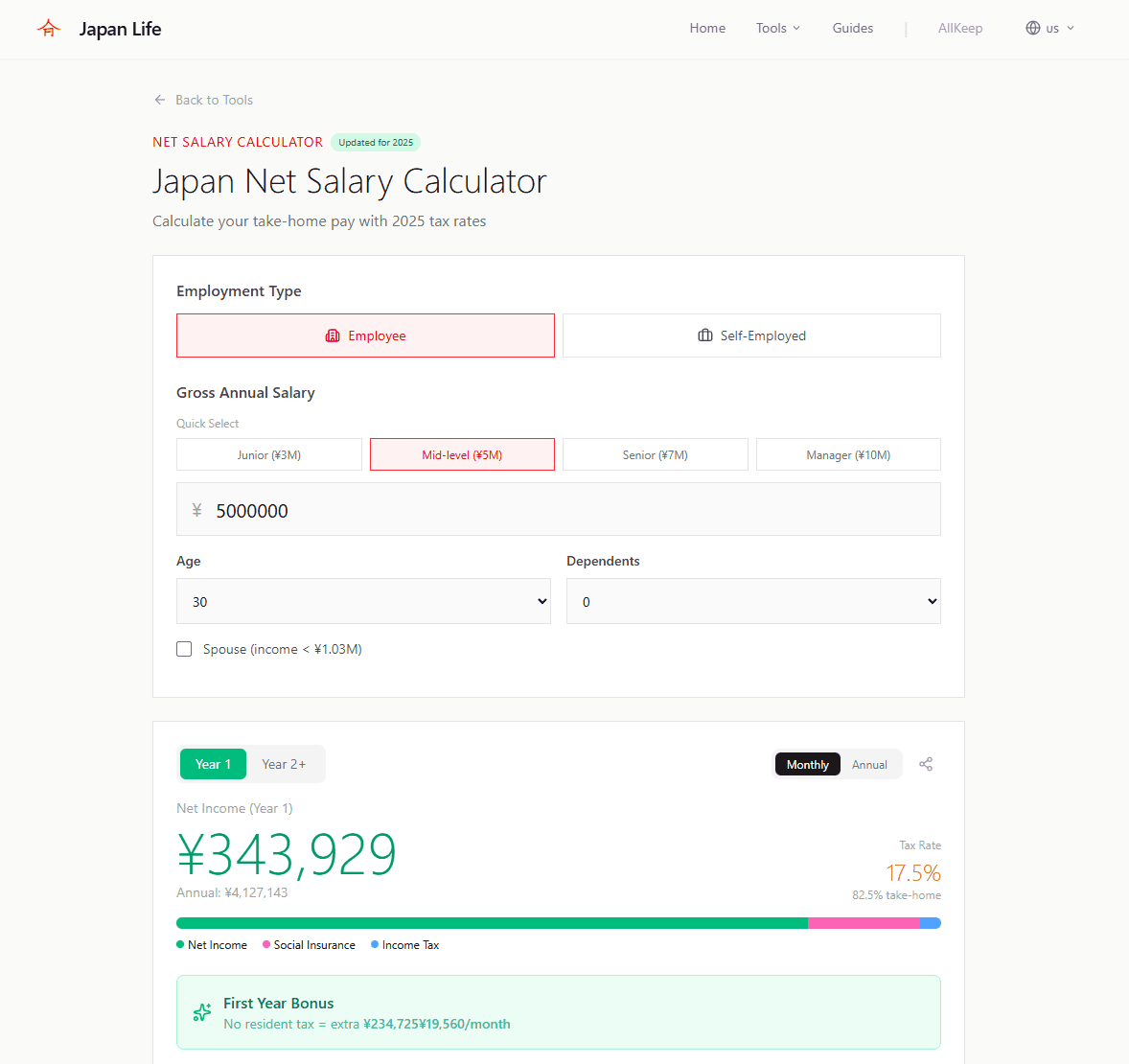
Japan's 2026 tax brackets are in. The Net Salary calculator now reflects:
- Updated income-tax brackets (no major rate changes, but bracket thresholds shifted with inflation)
- 2026 social-insurance rates for health, pension, and unemployment
- The Year 1 vs Year 2 split — still the most-asked question — now with corrected residence-tax timing for moves after April
Initial costs
The Initial Costs Calculator was refreshed end-to-end:
- Key money / shikikin trends for 78 cities (it's slowly disappearing from listings in many regional cities — the calculator no longer assumes 1 month default outside Tokyo metropolitan area)
- Furniture and appliance baselines re-priced against actual 2026 Nitori, IKEA Japan, and Don Quijote SKUs
- Moving company quotes refreshed for 2026 (single-person move, same-prefecture)
Cost of living and monthly budget
- Utilities re-indexed for 2026 (gas + electricity dropped slightly YoY in most regions; water flat)
- Groceries baseline updated against current supermarket prices
- Transit pass costs refreshed for the cities where we have real commuter pass data
Map: one component, two tools
Until now, the Monthly Budget and Property Agent had separate map implementations that drifted out of sync. As we added cities, the divergence got noticeable — one tool would show a district that the other didn't recognize.
We unified the map mode. Same data, same component, same behavior. If you click a district in Property Agent and switch to Monthly Budget, it stays selected.
What's still missing
Honest list:
- Rural prefectures — we cover the 78 most-populous cities. If you're moving to a town under 100k people, you'll still get prefecture-level estimates.
- English-only neighborhood notes — district descriptions are EN for now. JA is partial. We'll catch up via the same i18n KV sync that powers the rest of the site.
- Real-time rent feeds — current numbers are 2026 baselines, not live SUUMO/HOME'S scrapes. We're prototyping a feed; not promising anything yet.
Try the new coverage
If you were previously hitting the "closest city" fallback, the tool should work for you now. Open whichever calculator was useful before and check the city dropdown:
If your city is still missing or a number looks off, tell us: contact or open an issue on GitHub. The data lives in the repo for a reason — fixes are easy to ship.